How Real-Time Adjustment Features Are Transforming Standard Welcome Packages in Online Sportsbooks
Ben Hansen · May 28, 2026
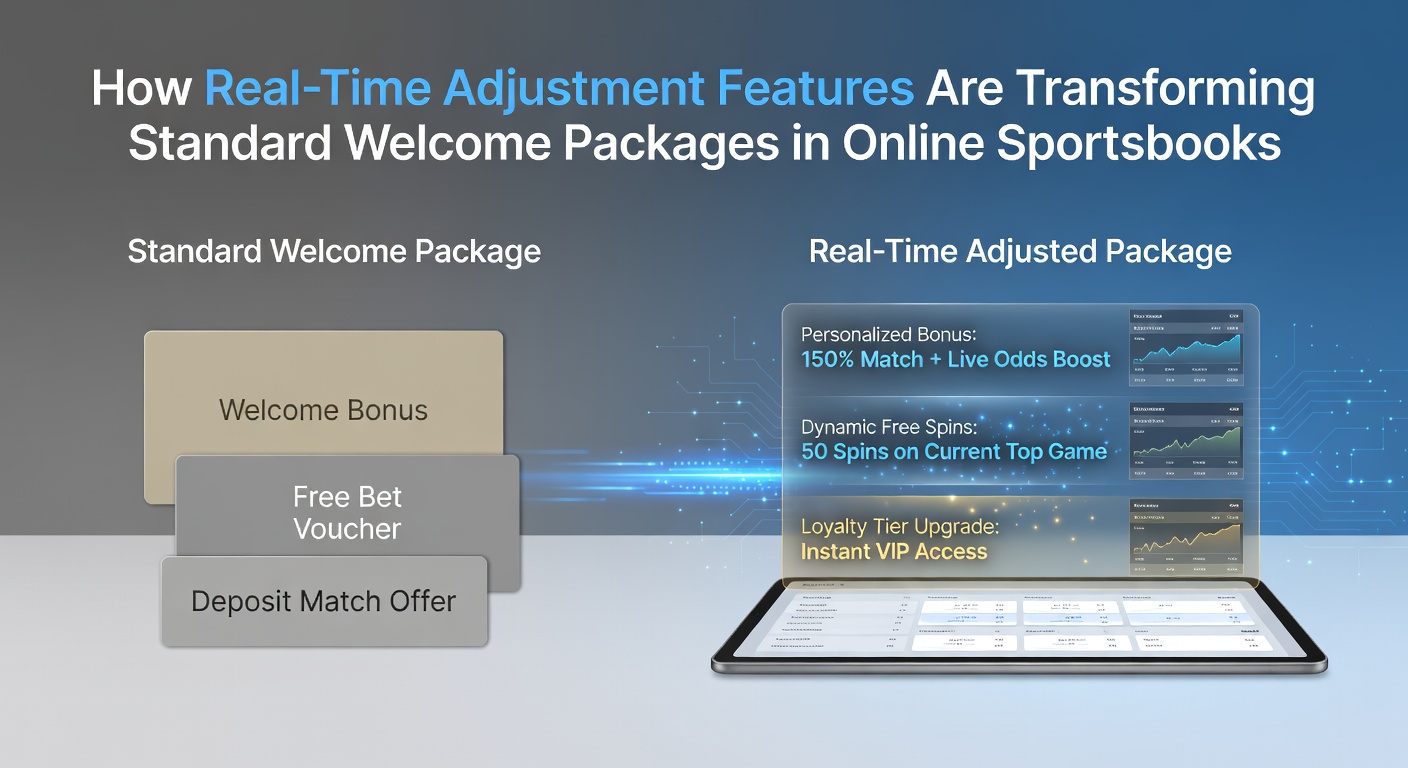
How Real-Time Adjustment Features Are Transforming Standard Welcome Packages in Online Sportsbooks
Standard welcome packages in online sportsbooks have long relied on fixed deposit matches and free bet offers, yet real-time adjustment features now allow operators to modify these incentives based on live user data such as location, betting patterns, and session duration. This shift has gained momentum through 2026 as platforms integrate advanced algorithms that respond instantly to player behavior, and observers note that by May 2026 several major operators had expanded these tools across North American and European markets.
Traditional Structures Versus Dynamic Modifications
Fixed welcome offers typically provided a set percentage match on initial deposits along with predetermined free bet amounts, but data from industry reports shows these static models often led to uniform experiences that failed to account for individual differences in activity levels. Real-time systems, by contrast, pull information from multiple sources including device type, time of day, and prior wagering history to recalibrate bonus values on the fly, which means one user might receive an increased match rate during peak hours while another sees a tailored free bet tied to specific sports preferences.
According to figures from the New Jersey Division of Gaming Enforcement, platforms employing these adjustments reported higher initial deposit completion rates in early 2026 compared to those using legacy packages, and researchers at academic institutions have documented similar patterns in controlled studies of user retention metrics.
Core Mechanisms Driving Adjustments
Algorithms monitor variables such as geolocation signals and live market odds to trigger changes, for instance scaling a welcome bonus upward when a player accesses the platform from a high-competition region or during major events. Session analytics further refine outputs by tracking click patterns and time spent on different bet types, allowing the system to present an adjusted offer that aligns with emerging interests before the user completes registration.
These processes operate through application programming interfaces that connect directly to customer relationship management databases, and one case involved an operator that automatically upgraded a standard 100 percent match to 150 percent for users whose browsing indicated interest in live betting markets. The adjustments occur within seconds, which eliminates delays that once characterized manual review processes in older systems.
Effects on Player Onboarding and Retention Data
Studies conducted by European research consortia indicate that dynamic welcome packages correlate with extended average session times during the first week after signup, while static offers showed flatter engagement curves. In practice operators track metrics such as repeat deposit frequency and cross-category wagering, and real-time modifications appear to boost these numbers by presenting incentives that evolve alongside user actions rather than remaining constant.

By May 2026 several platforms had integrated these tools with broader loyalty frameworks, so that an adjusted welcome bonus could feed directly into tier progression calculations without requiring separate manual input. Observers note that this seamless connection reduces friction points that previously interrupted the transition from initial signup to ongoing participation.
Regulatory Context and Implementation Patterns
Regulatory bodies in multiple jurisdictions have begun issuing guidance on transparency requirements for dynamic offers, which means operators must display clear terms even when values fluctuate in real time. Canadian provincial regulators, for example, have emphasized the need for audit trails that document how algorithms arrive at specific adjustments, and similar expectations appear in Australian state frameworks that oversee digital wagering activities.
Implementation varies by market size, with larger operators deploying proprietary engines while smaller platforms adopt third-party solutions that integrate with existing payment gateways. Data from industry associations reveals that adoption rates accelerated after 2025 updates to software development kits made these features more accessible across different technology stacks.
Future Trajectories in Offer Personalization
Continued refinement of machine learning models promises further granularity, such as incorporating weather data for sports events or social media signals where permitted, yet current implementations already demonstrate measurable shifts in how welcome packages function. Reports compiled by international gaming research groups highlight that operators using real-time adjustments maintain competitive positioning as user expectations evolve toward more responsive experiences.
Conclusion
Real-time adjustment capabilities have moved welcome packages from static templates to responsive systems that align incentives with immediate user context, and evidence from regulatory filings and academic analyses supports their growing presence across global markets as of May 2026. These developments continue to reshape initial interactions in online sportsbooks by emphasizing adaptability over uniformity.