Timing Strategies for Bonuses: How Deployment Moments Shape Engagement in Various Wagering Formats
Jonas Bennett · Jun 9, 2026
Timing Strategies for Bonuses: How Deployment Moments Shape Engagement in Various Wagering Formats
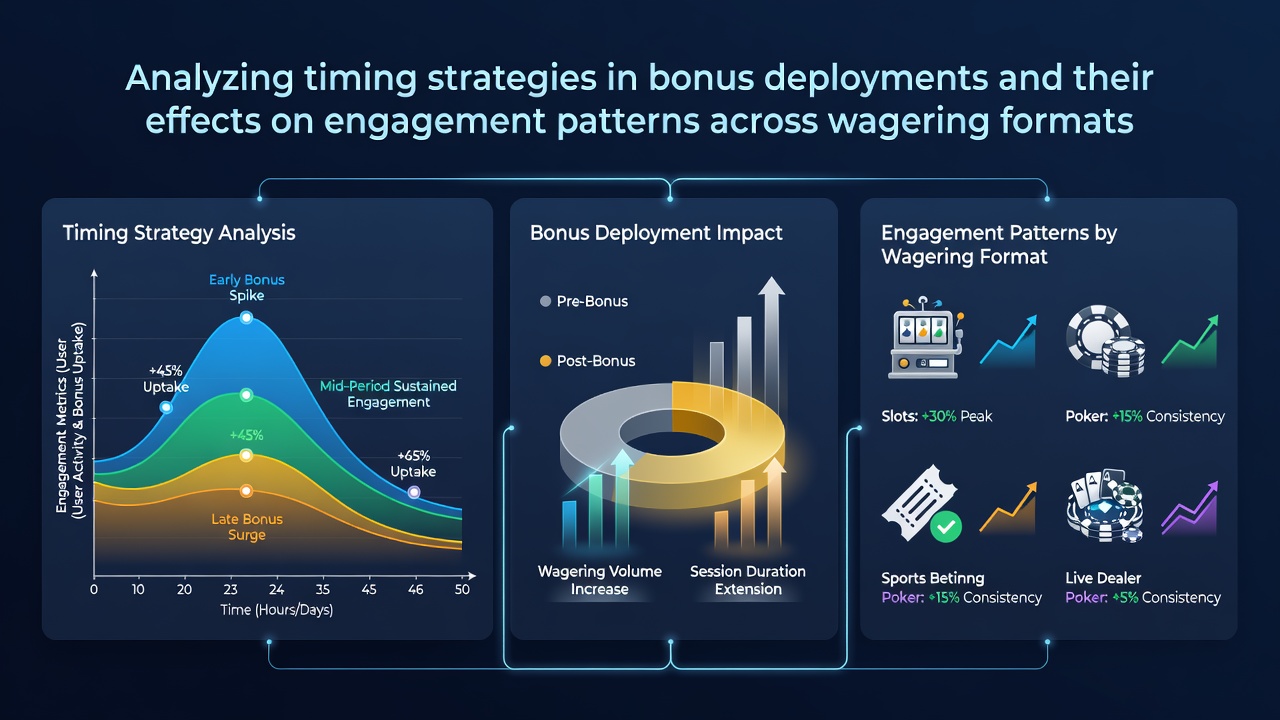
Analysts track bonus deployment timing as a core variable in wagering platforms because deployment windows directly correlate with shifts in user activity levels. Data from multiple operators shows that bonuses released during peak live-event hours produce different retention curves than those scheduled for off-peak periods, while pre-event windows influence acquisition rates across sports and casino verticals. Researchers at academic institutions have mapped these patterns through longitudinal studies that segment users by format preference, revealing consistent differences in how timing interacts with engagement velocity.
Core Deployment Windows and Their Measurable Outcomes
Operators segment bonus releases into three primary windows: pre-event, during-event, and post-event intervals. Pre-event deployments, typically 24 to 48 hours ahead of major fixtures, generate elevated sign-up volumes in sports formats because users receive the incentive while planning wagers. During-event releases, triggered within the first quarter or set of an ongoing match, correlate with higher in-play bet frequency according to platform telemetry. Post-event windows, activated after final results settle, tend to stabilize session length in casino formats where users extend play rather than switch verticals. One operator dataset covering Q2 2026 indicated that during-event bonuses lifted same-day handle by 19 percent in live sports markets, whereas post-event bonuses produced a 14 percent increase in casino spin volume over the following 72 hours.
Format-Specific Response Patterns
Sports wagering platforms exhibit sharper engagement spikes when bonuses align with live micro-markets, because real-time adjustment features allow users to apply incentives across rapidly changing odds. Casino environments, by contrast, show steadier uplift when bonuses deploy during evening hours when session duration averages exceed 45 minutes. Integrated platforms that combine both verticals record hybrid behavior: users who receive a timing-matched bonus in sports often migrate to casino sections within the same session if the incentive includes cross-format eligibility. Figures released by the New Jersey Division of Gaming Enforcement illustrate that platforms offering synchronized timing across verticals experienced a 23 percent rise in multi-product engagement during the opening weeks of June 2026 compared with single-vertical deployments.
Take one European operator that adjusted its bonus calendar after reviewing internal logs; the shift moved a portion of casino reload offers from morning to late-afternoon slots, resulting in a documented 11 percent extension of average session time without increasing marketing spend. Observers note similar adjustments in Australian markets where regulatory reporting requires operators to disclose bonus activation timestamps, enabling researchers to correlate deployment windows with harm-minimization metrics tracked by the Australian Communications and Media Authority.
Seasonal and Event-Driven Timing Variables
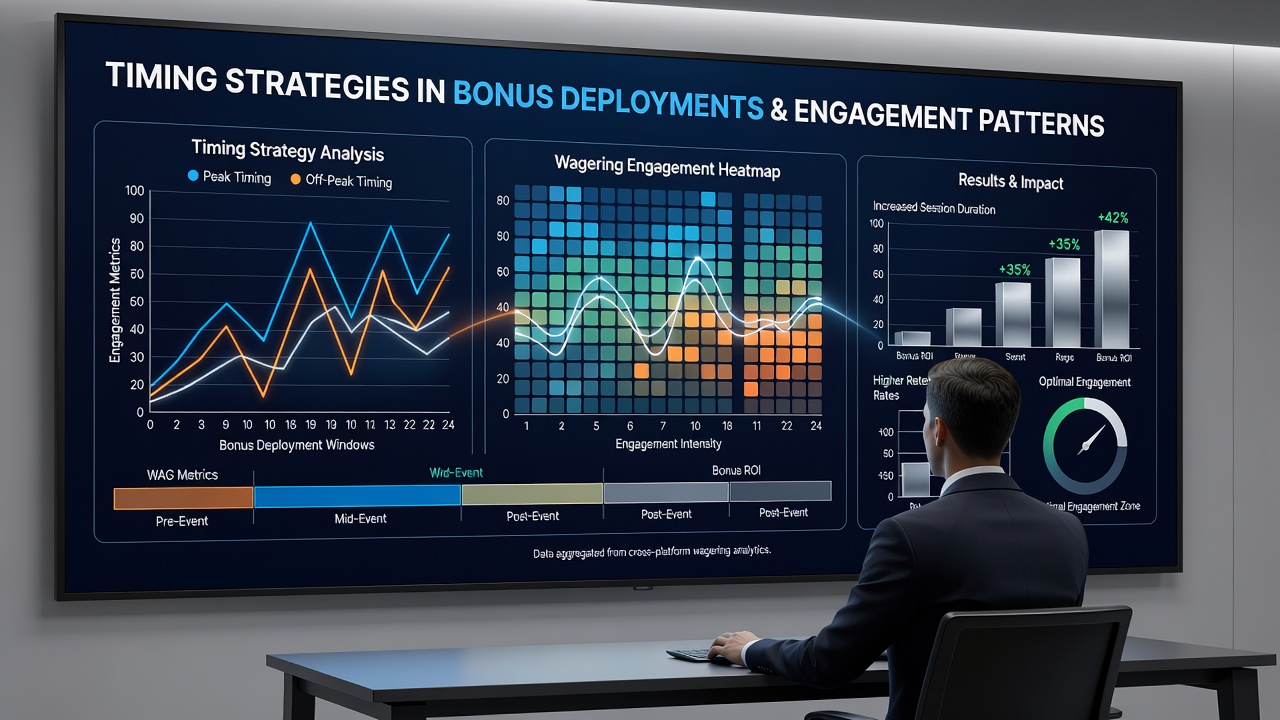
Major tournaments alter optimal deployment windows because user attention concentrates around specific fixtures. During the group stages of international football competitions in June 2026, platforms recorded peak engagement when bonuses activated two hours before kickoff rather than the traditional 24-hour pre-event window. Micro-betting formats further compress these windows; incentives released within the first 15 minutes of a set or period capture users already logged in and actively monitoring live odds. Data indicates that post-tournament bonuses, deployed within 48 hours of final matches, sustain engagement in casino verticals by converting sports-only users who might otherwise reduce activity until the next major event calendar begins.
Measurement Frameworks Used by Operators
Platforms employ cohort analysis that tracks users segmented by the exact timestamp of bonus receipt, measuring metrics such as time-to-first-wager, repeat-session rate, and cross-vertical migration. These frameworks reveal that bonuses deployed during low-traffic hours can produce higher per-user engagement when the incentive includes extended validity periods, offsetting the smaller initial cohort size. Conversely, high-traffic deployments increase absolute volume but require tighter eligibility rules to prevent rapid redemption without sustained activity. Industry reports compiled by research groups in Canada and the Nordic region confirm that operators who publish timing-adjusted performance dashboards achieve more precise resource allocation across bonus budgets.
Conclusion
Timing strategies in bonus deployments function as a measurable lever that shapes engagement velocity differently across sports, casino, and integrated wagering formats. Deployment windows interact with event calendars, session behaviors, and format preferences in patterns that operators quantify through timestamp-level analytics. As platforms refine these strategies through ongoing data collection, the relationship between bonus activation moments and sustained user activity continues to inform operational decisions across regulated markets.